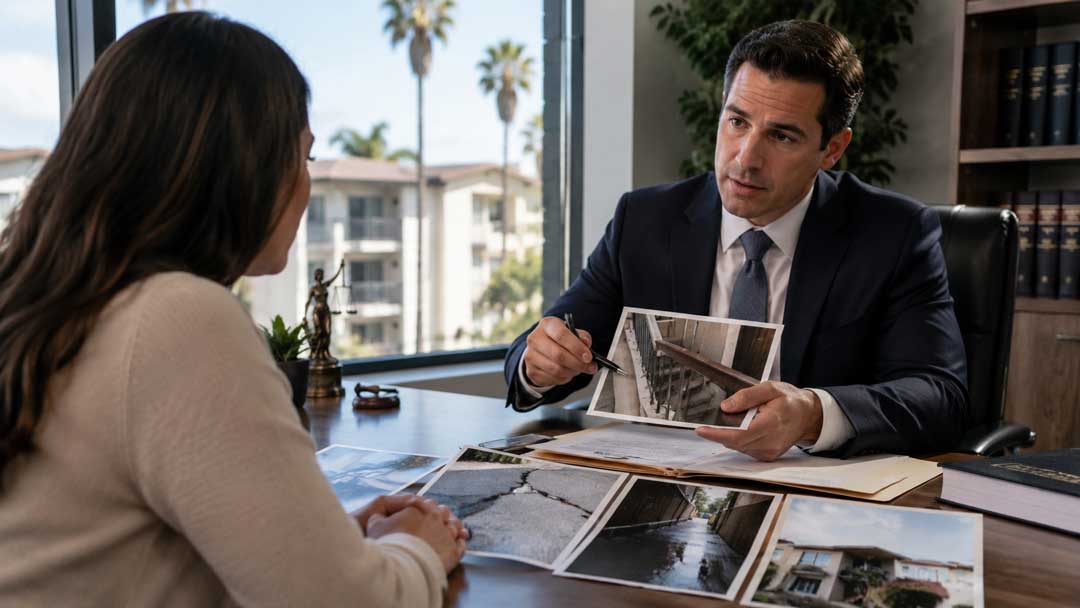

Property owners in Los Angeles must take reasonable care to prevent harm on their premises. Serious injuries can result from hazards that those responsible for a property’s upkeep and safety ignore or leave unaddressed.
A skilled Los Angeles premises liability lawyer thoroughly assesses risk by reviewing each element of the owner’s legal duty and every detail surrounding an incident. Common steps include examining site conditions, analyzing prior incidents like slip-and-fall cases, and inspecting how closely maintenance schedules have been followed over time.
We also look at whether applicable local requirements or California laws were followed, as compliance issues may provide important evidence when evaluating the property’s safety history. Careful study includes determining the circumstances under which the visitor entered the property and identifying the protective measures the property holder actually used to reduce danger in practice.
This assessment begins by evaluating the property’s physical conditions and identifying hazards at the location involved in your claim.
Evaluating Property Conditions and Hazards
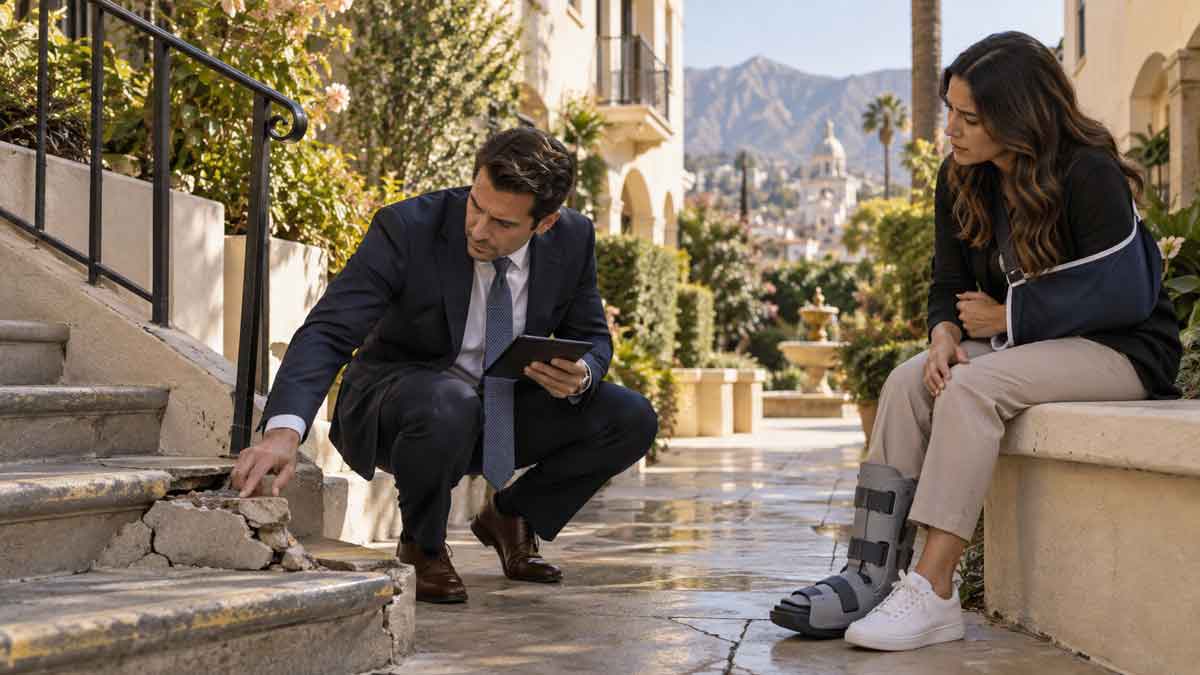
Assessing risk starts with a close look at property conditions. Our team always checks for clear signs of hazards, such as loose steps or wet floors. You need to identify anything that could cause a visitor to trip, slip, or suffer harm.
We know uneven sidewalks, dim lighting in stairwells, and missing handrails can raise the risk for guests who may not see the danger in time. These conditions can become important evidence when determining whether a property owner or responsible party failed to exercise reasonable care.
Do you see a broken gate, unlocked pool, or unlit walkway nearby? If so, that can raise the chance of harm for you and people of all ages. You often see how a property owner’s lack of upkeep plays a big role when a premises liability injury lawyer in Los Angeles assesses the risks present.
We will work tirelessly to help you recover the compensation you need to move forward with your life

Reviewing Incident and Maintenance Records
Reviewing incident and upkeep records can help identify risk patterns that may have caused harm. These records offer a timeline, giving you insight into the property’s day-to-day safety and how issues were handled.
Tracking Incident Reports: Incident records tell you if there have been prior falls, injuries, or complaints about hazards in the same location. When you see a trend, it may provide evidence that a dangerous condition was known or should have been identified.
Evaluating Maintenance Histories: Maintenance logs show when repairs were scheduled, what was fixed, and whether unsafe conditions remained. Knowing whether issues were delayed or ignored provides context about who may be responsible for injuries.
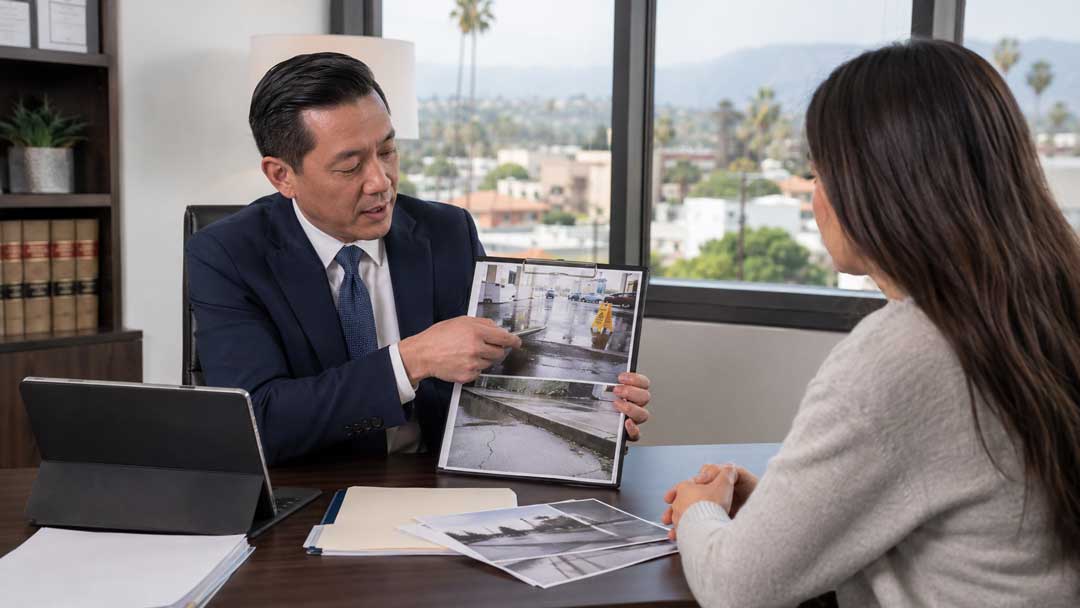
Cross-Referencing Times, Photos, and Witnesses: It is common to match record dates with time-stamped photos and statements from people present. Clear, consistent records can support or challenge claims about the safety of a property during an accident.
We will treat you with the respect and compassion you deserve.

Identifying History of Similar Accidents
Looking into past incidents is a key step that helps you determine whether a property or area is prone to repeated harm.
Identifying Reported Incident Patterns: Tracking past accidents on site shows whether the property has a recurring hazard or upkeep problem. Prior incidents may also provide evidence concerning whether the responsible party knew or should have known about a dangerous condition.
Studying Local News and Public Records: Checking accident reports, city records, and available public records can provide additional information about repeat safety issues. These records may help identify patterns that warrant further investigation.
Reviewing Legal Filings and Settlements: Looking at past liability claims or lawsuits can provide context about how owners or managers addressed prior accidents. The relevance of prior claims depends on the specific facts and circumstances of the current case.
Assessing Compliance with Local Safety Laws
Tracking the history of similar accidents often leads to a close look at whether applicable safety requirements were followed. Los Angeles premises liability lawyers use this step to show you where legal duties may not have been met.
The stakes are high because property owners may have responsibilities under California law and applicable building, safety, or local requirements. Depending on the property and the condition involved, inspection records, maintenance requirements, warning practices, and correction of known hazards may all become relevant.
Failure to address a dangerous condition can become important evidence when evaluating whether a property owner acted reasonably under the circumstances. The specific legal requirements depend on the property, its use, and the nature of the hazard.
These lawyers will check for inspection records, posted warnings, or recent fixes as part of their process. Many clients feel overwhelmed at first, but reviewing safety practices becomes a key part of the risk assessment.
You are not just a case number – you are our top priority.

Analyzing Visitor Status and Permission
Determining a visitor’s status and the permission granted can inform the property owner’s duty of care, but California premises liability law focuses on the circumstances and whether the responsible party acted reasonably under the circumstances.
Visitor or Guest: A person who enters a property with permission, whether as a customer, client, guest, or visitor, may be owed a duty of reasonable care. The property owner may need to take reasonable steps to identify, address, or warn about dangerous conditions that could foreseeably cause harm.
Permission and Purpose of Entry: The circumstances surrounding why and how a person entered the property can be relevant when evaluating the owner’s responsibilities. Evidence concerning permission, the purpose of the visit, and the condition of the property may all affect the analysis.
Unauthorized Entry: A person who enters without permission may be subject to different legal considerations. The circumstances of the entry, the nature of the danger, and other facts can affect what duty, if any, the property owner owed.
Measuring Owner Efforts to Prevent Harm
After we review the circumstances surrounding your presence on the property, our focus shifts to the steps the owner took to keep you safe. This helps us determine whether the owner took reasonable steps to prevent harm from known or foreseeable dangers.
Warning Systems and Posted Alerts: Owners may have a duty to warn visitors about risks that may not be obvious. We check if clear signs, floor cones, or barriers were used near risky areas. The presence or absence of timely warnings can become important evidence in a premises liability claim.
Regular Inspection and Intervention: Property owners should take reasonable steps to identify and address dangerous conditions. We look for evidence such as maintenance logs, incident reports, or repair records that show what the owner knew and how the problem was handled. Skipping these steps may support an argument that the owner failed to exercise reasonable care.
Employee Training and Safety Policies: How employees are trained and supervised can affect safety on site. We review safety training records, manager walk-through routines, and procedures for reporting dangerous conditions. These records can help establish how the property was maintained and how safety concerns were addressed.
Consulting Expert Witnesses and Investigators
Consulting expert witnesses and skilled investigators can strengthen risk assessments in premises liability claims. The need for an expert depends on the complexity of the case and the issues that must be established through evidence.
Experts with relevant experience can explain complex issues such as building design, maintenance practices, safety procedures, or causation that may be difficult to evaluate without specialized knowledge. Treating doctors and other professionals involved in your care may also provide important evidence regarding the nature and effects of your injuries.
We focus on using admissible and relevant opinions because California courts apply specific evidentiary requirements. If your case involves unusual technical details or disputed facts, outside experts may be needed to ensure that each theory of liability is supported and clearly explained.
We rely on appropriate professional resources and investigation methods to find the right match for the issues presented by your case. Input from experienced investigators and experts helps us support or challenge claims and select an appropriate strategy on your behalf.
Risk evaluation in premises liability cases calls for a careful legal review. Our approach uses detailed site inspections alongside analysis of maintenance records and incident reports. By combining our legal experience with reliable evidence, we can evaluate hazards that may have contributed to your injury.
Each fact is measured against applicable California law. This thorough investigation helps protect your interests throughout the claims process. We also work closely with medical providers when your injuries require treatment.
When a car, truck, or bicycle accident occurs on another party’s property, our experience handling these cases provides focused legal guidance. Evidence is preserved and reviewed carefully to help you understand your options.
Our goal is to hold negligent parties accountable while respecting your needs and rights. If you have been hurt or lost a loved one due to unsafe property conditions, we invite you to contact Venerable Injury Law for a free consultation.
Our team will listen, explain your legal options, and provide clear guidance about next steps.
We believe that our experience, dedication, and personalized approach set us apart from the rest.