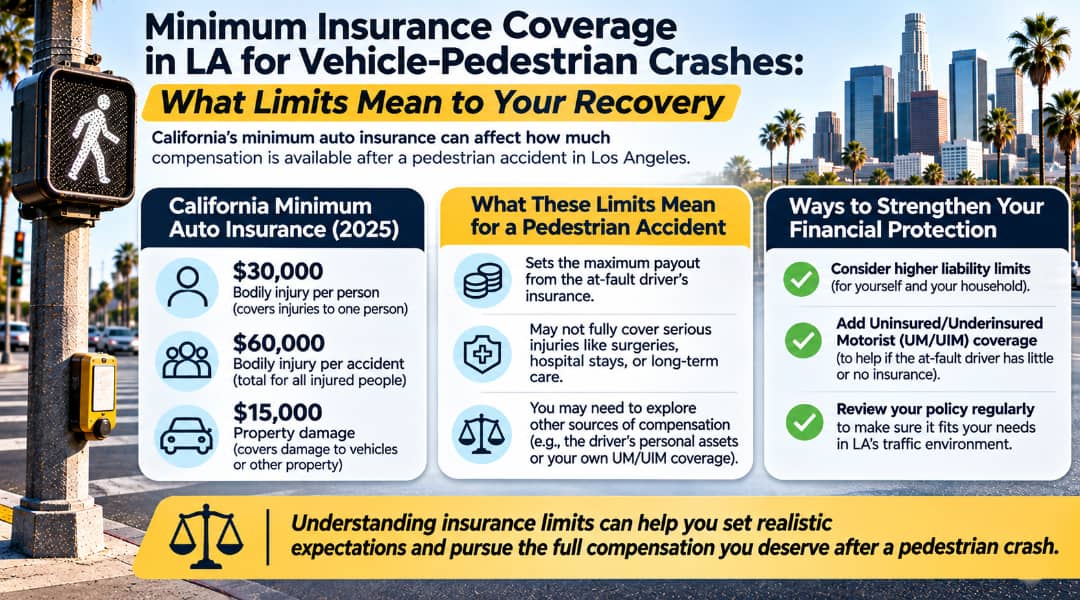

Many Los Angeles pedestrian accidents involve more than just a careless driver. Identifying every party that may share responsibility is key to building a strong claim and maximizing available compensation. Other defendants can include employers, government agencies, businesses, landlords, automakers, repair shops, or contractors; each may have played a role or failed in a duty that contributed to the incident.
By considering all possible sources of liability, injured pedestrians and their advocates can seek the full range of resources needed for recovery. This careful approach can make a vital difference when insurance or damages from the driver alone fall short.
Employer Liability: When Drivers Are Working at the Time of the Crash
Is the driver’s employer responsible if the crash happened during work hours? California law allows a pedestrian to seek damages from an employer when the driver was doing job duties at the time of the accident. The key is proving the driver was acting within the scope of employment, not just driving a company car for personal errands. Employers may be liable if the driver was delivering goods, providing work-related services, or running tasks for the business when the accident occurred.
This legal concept, called respondeat superior, holds companies accountable for their workers’ actions if those actions directly relate to their job. The process often requires reviewing company policies, driver schedules, and the purpose of the trip. When an employer is named as a defendant, there may be larger insurance policies available to help cover losses. For those facing serious injuries, consulting with a Pedestrian accident lawyer in Los Angeles from Venerable Injury Law can help clarify if an employer should be included in a claim.
We will work tirelessly to help you recover the compensation you need to move forward with your life

Holding Public Entities Accountable for Dangerous Road Conditions
Sometimes a pedestrian accident claim in Los Angeles involves more than just the driver’s actions or mistakes.
- Public entities may be held responsible if dangerous road conditions played a part in the collision. This can include poorly designed intersections, malfunctioning traffic signals, or sidewalks in bad repair that make it hard for people to cross safely. Proving liability in these cases often depends on showing the city or county knew about the problem and did not fix it in a reasonable time.
- The process for claims against public agencies is stricter than for private parties. There is usually a shorter deadline to give notice, and the rules for what counts as a dangerous condition are very specific. Many claims focus on whether the government could have prevented the accident by making a needed repair or warning.
- Holding a public entity accountable may give access to insurance coverage that private drivers lack. Including these defendants can help ensure all parties who played a role in the accident are named, which can make a big difference for those with serious injuries.
We will treat you with the respect and compassion you deserve.

Commercial Property Owners’ Responsibility for Pedestrian Safety
Commercial property owners in Los Angeles can play a key role in pedestrian safety and may sometimes share liability when an accident happens near their premises.
- A property owner’s responsibility often extends to areas like parking lots, private walkways, and driveways where pedestrians may be at risk. If there are unsafe features, such as poor lighting, confusing signage, or blocked sightlines, these conditions might contribute to a pedestrian accident. When a property owner fails to address known hazards, they could be named in a legal claim.
- The way a business designs and manages access points also matters. Entrances that force pedestrians to cross high-traffic areas without clear markings or barriers can increase the risk of collisions. Owners are expected to use reasonable care to reduce these dangers wherever people walk on or near their property.
- Including a commercial property owner as a defendant may help those injured seek more complete compensation, especially if the business carries significant insurance coverage. This approach can be important for those with severe injuries, since identifying every possible source of recovery often makes a real difference.
Landlords and Residences: Liability for Hazardous Sidewalks
Hazardous sidewalks in front of residential buildings can raise questions about a landlord’s legal responsibility when a pedestrian is injured.
- A landlord may be liable if the property’s sidewalk is damaged or poorly maintained and that condition contributes to an accident. In Los Angeles, local laws or lease agreements sometimes require landlords to keep sidewalks adjacent to their property safe for public use. If a landlord knew about a cracked, raised, or blocked sidewalk but did not fix it, that failure could support a claim for liability.
- Liability is not automatic and will depend on who actually controls or maintains the sidewalk area. In some cases, the city or another public entity might be responsible for repairs, while in other situations, the lease or property agreement places this duty on the landlord. Determining who must maintain the sidewalk is an important first step when considering a legal claim.
- For those seeking compensation, naming a landlord as a defendant may open access to additional insurance coverage and financial resources beyond the driver’s policy. This approach can be especially useful in cases with serious injuries or when the main party at fault does not have enough coverage to pay for all damages.
You are not just a case number – you are our top priority.

Automakers and Parts Manufacturers: Defects That Harm Pedestrians
Automakers and parts manufacturers can sometimes be held liable when defects in vehicles or components cause harm to pedestrians.
- A vehicle defect may include problems with brakes, steering, or lighting that prevent a driver from seeing or stopping in time. If a manufacturer knew about a dangerous issue and did not fix it or warn buyers, that company might share legal responsibility for an accident.
- Sometimes, the danger comes from a single faulty part, such as a malfunctioning airbag or a sensor that fails to detect people in the crosswalk. These parts are often made by third-party suppliers, so more than one company could be involved in a claim.
- Recalls can play a big role in these cases. If a recall was issued but not properly communicated, or if the fix was delayed, injured pedestrians may have another avenue for seeking compensation.
- Naming automakers or parts suppliers as defendants may increase the resources available to cover medical costs, lost wages, and other damages. This approach can be especially important for those with severe injuries when insurance from the driver alone is not enough.
Repair Shops and Maintenance Providers: Faulty Work Leading to Accidents
Repair shops and maintenance providers can also play a role in who is liable after a pedestrian accident.
We believe that our experience, dedication, and personalized approach set us apart from the rest.