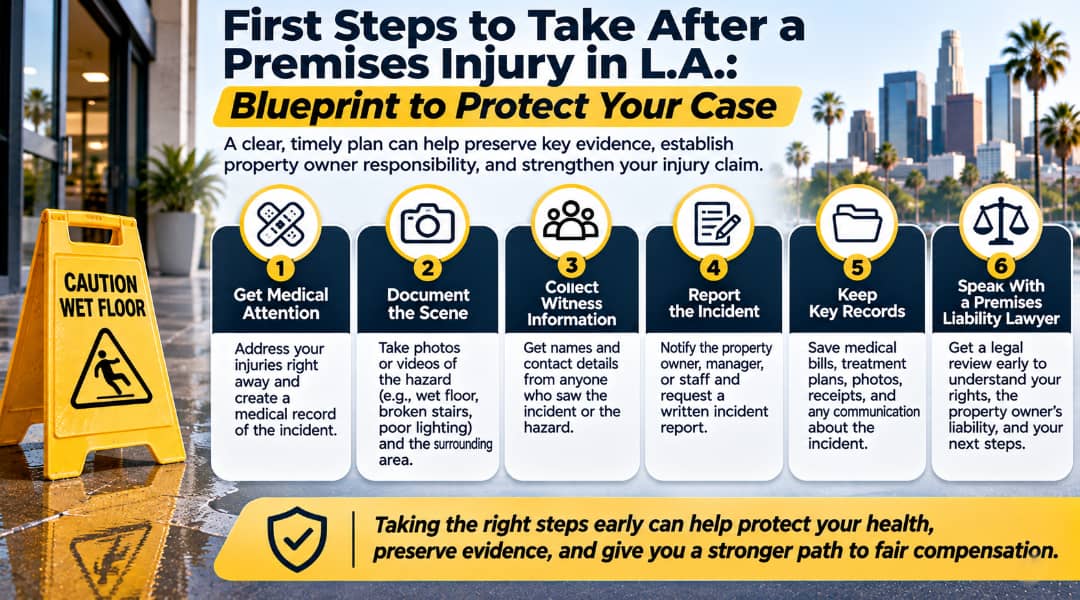

Getting hurt because of dangerous conditions on someone else’s property in Los Angeles creates both immediate and long-term challenges. Early actions taken by the injured party can make a difference in preserving evidence and establishing whether a property owner may be held accountable.
Every detail, from preserving evidence at the scene to meeting strict legal deadlines, can shape the strength of a premises liability case. This blueprint offers practical, step-by-step guidance to help injured individuals protect their legal rights and gather the evidence needed to pursue a claim under California law.
Secure Photographic Evidence of the Hazard Immediately
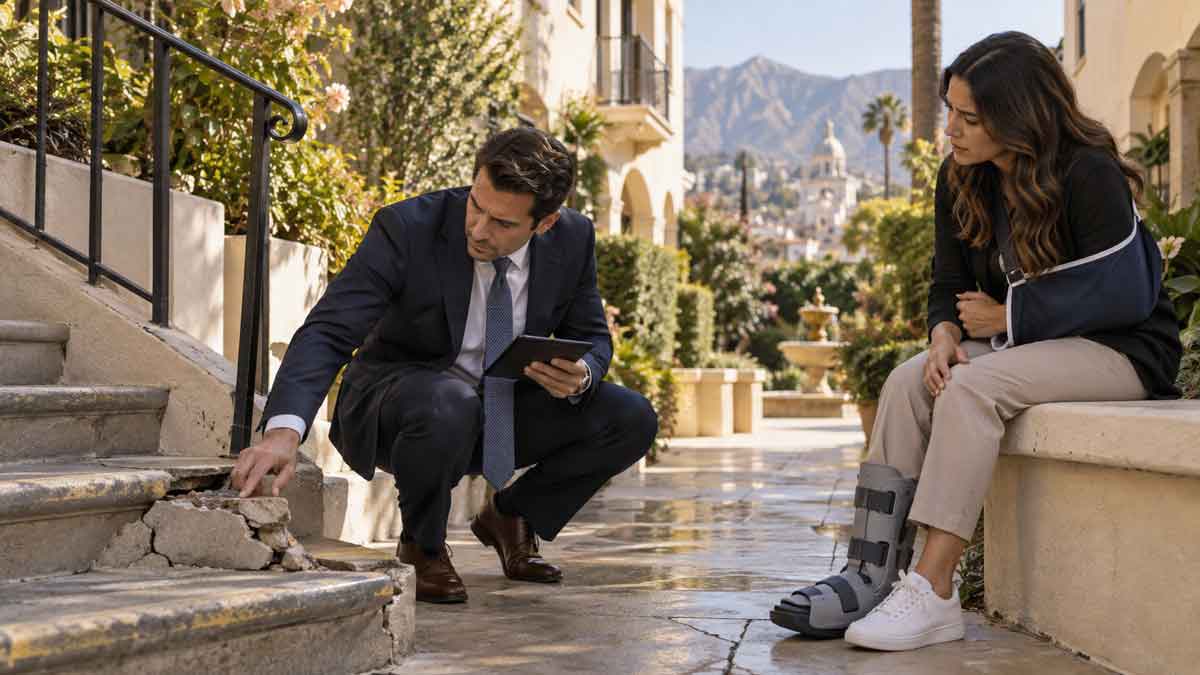
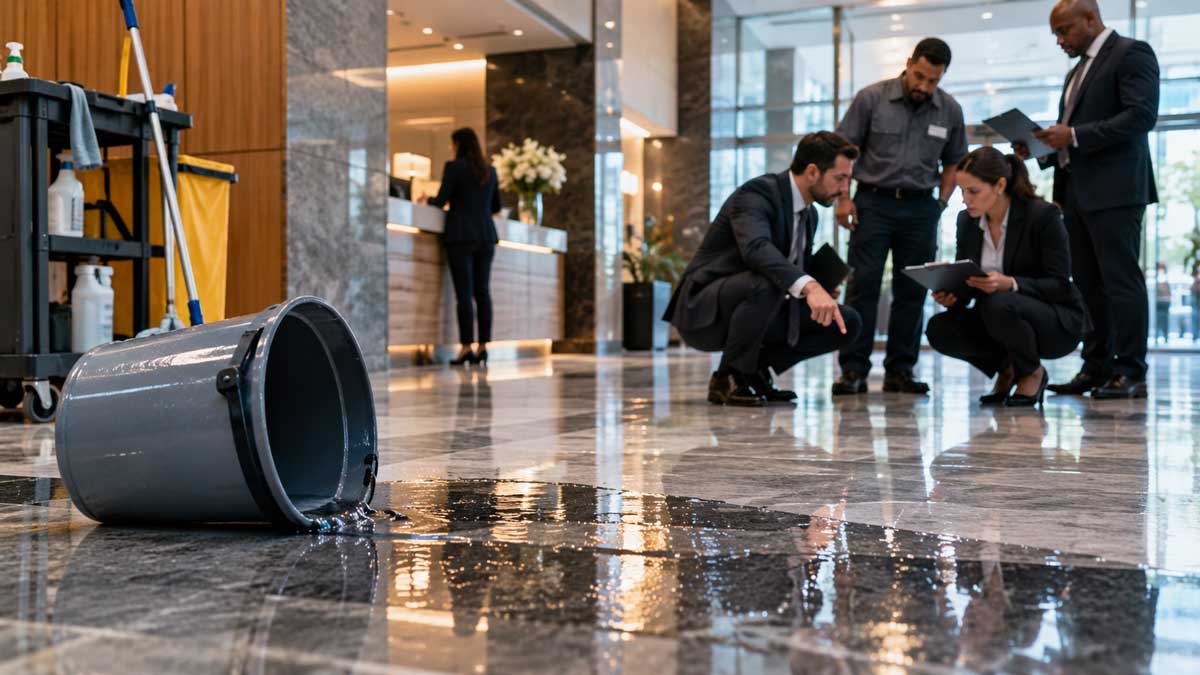
Act fast to secure visual proof of the hazard that caused the injury. Take clear photos of the dangerous condition, the area around it, and any warning signs or lack of them. Be sure to capture the state of the scene before anything changes. Photos should show the hazard from different angles. Include close-ups and wide shots to help others understand what happened. If there is spilled liquid, broken stairs, poor lighting, or loose flooring, document it so the details are preserved.
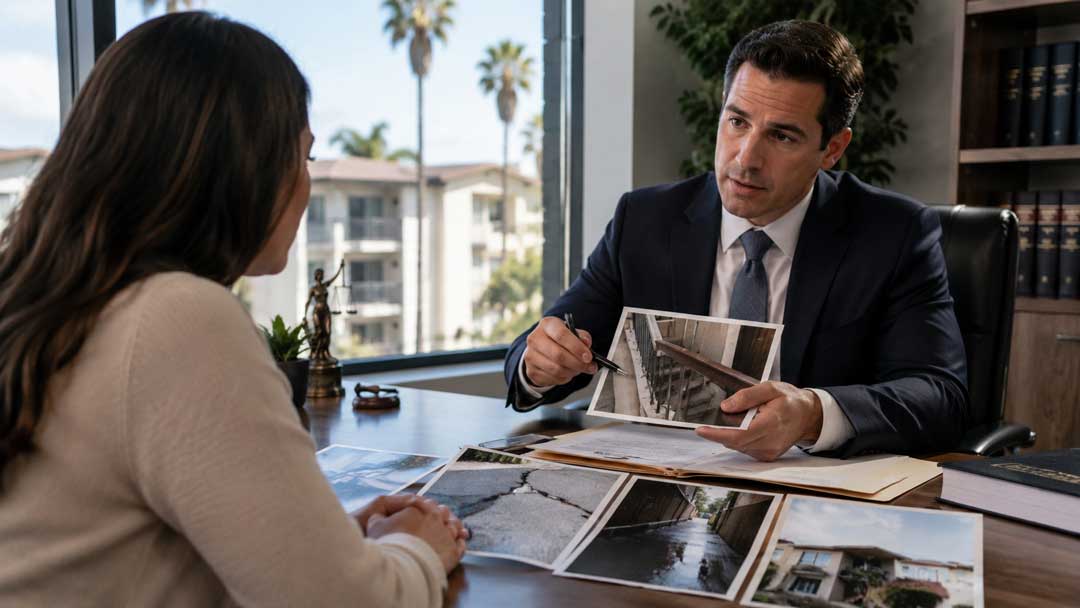
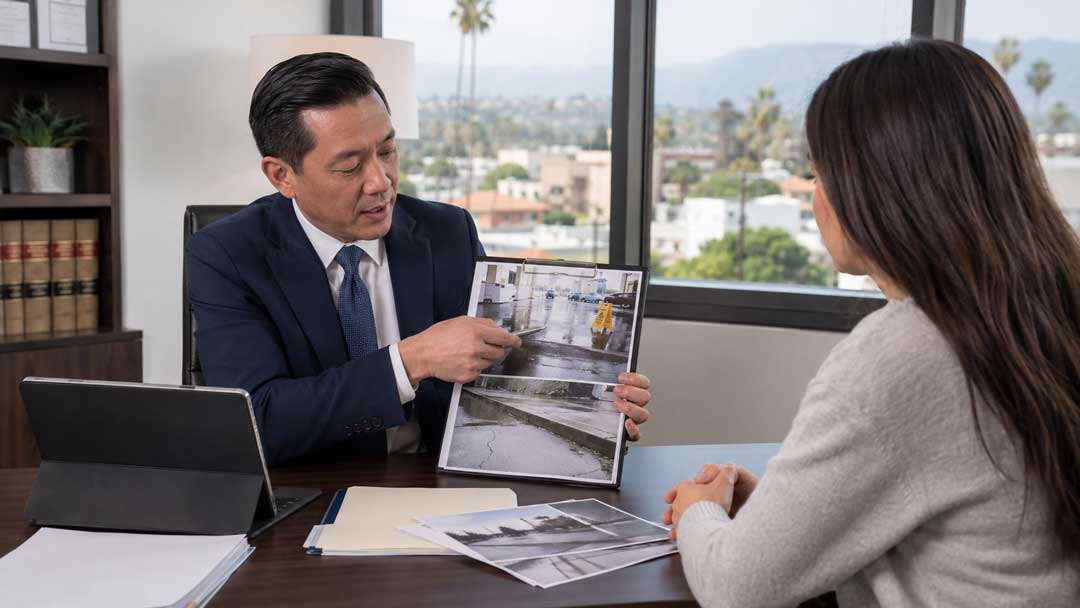
This visual evidence can help establish whether the property owner took reasonable steps to correct or warn about the danger, a key consideration in proving negligence in a premises liability case. The photographs may also help show the condition of the hazard and the surrounding area at the time of the incident. The claimant and a premises liability injury lawyer in Los Angeles can use this documentation when investigating whether the property owner or manager failed to address an unsafe condition.
If the evidence is strong, it can support the claim that the injured party’s harm was directly linked to the property’s unsafe condition.
We will work tirelessly to help you recover the compensation you need to move forward with your life

Gather Names and Contact Details of Witnesses on the Scene
Witnesses at the scene play a vital role in supporting an injury claim after an accident on someone else’s property.
1. Collecting the names and contact details of every person who saw the incident can help clarify what happened. Witness accounts may confirm the hazard’s presence, describe the property’s condition, or note the absence of warning signs. These statements can help establish whether the property owner or occupier failed to maintain a reasonably safe environment.
2. Ask witnesses if they are willing to provide a brief written statement while the details are still fresh. People’s memories can fade over time, and their recollections may become less precise, so early statements can be valuable. If someone can confirm the scene’s condition or the actions of the parties involved, this information may help establish what happened and whether negligence contributed to the injury.
3. The best practice is to store this contact information securely and share it with the legal team handling the claim. Reliable witness details may help when following up for statements or when preparing for any future legal process. Taking these steps early can preserve important information and support the investigation.
We will treat you with the respect and compassion you deserve.

Request and Preserve Surveillance Footage Before It’s Deleted
Time is critical if an accident on someone’s property may have been caught on camera.
1. Requesting surveillance footage from the property owner or business right after the incident helps preserve potential evidence before it is erased or overwritten. Property owners may repair hazards or place warning signs after an incident, making it important to secure footage that could show the scene as it was at the time of the injury.
2. Some properties keep video for only a few days before automatic deletion, so asking in writing for a copy as soon as possible can make a difference in what evidence remains available. A prompt written preservation request also creates a record that the footage was identified as potentially relevant to the incident.
3. If the business or property owner refuses or delays, legal steps may be necessary to preserve this evidence. An attorney can assess the appropriate options for requesting and securing available footage. Quick action can help protect relevant evidence and create a record of efforts to obtain it.
Seek Prompt Medical Attention and Retain All Records
Seeking prompt medical attention is one of the most decisive steps after an injury on someone else’s property. The medical evaluation addresses immediate health concerns and creates a documented record of the injuries and treatment following the incident.
California law requires individuals pursuing premises liability claims to establish specific legal elements, including that the responsible party was negligent and that the negligence caused the injury. Medical records offer important evidence of the harm suffered and help establish the timeline between the hazardous condition and the resulting injury.
Failing to see a doctor quickly, or not following prescribed care, may complicate the claim and allow the property owner or insurer to question whether the injuries were related to the incident or how serious they were.
Medical records play a critical role in documenting damages for a premises liability claim. They help establish the nature and extent of the injuries and connect the medical treatment to the reported incident.
Medical bills, physician notes, and diagnostic test results show the seriousness of the harm and help document the treatment received. Keeping all paperwork, discharge summaries, and prescription slips provides an organized record of medical expenses and ongoing care.
The implication is clear: prompt treatment and careful recordkeeping help protect the injured party’s legal position and provide important supporting evidence if the claim moves forward.
You are not just a case number – you are our top priority.

Record Details of Date, Time, Weather, and Lighting Conditions
Small details can make a big difference when building a premises liability case in Los Angeles.
1. Record the exact date and time of the incident as soon as possible. This information helps establish when the hazardous condition existed and can be essential when investigating whether the property owner knew or reasonably should have known about the danger.
2. Document the weather and lighting conditions at the scene. These factors can affect visibility and may influence whether a property owner’s duty of care was met or breached. For example, wet floors from rain or dim lighting may contribute to the hazard.
3. Keep your notes organized and consistent with any photos, witness statements, or official reports. Doing so allows an experienced legal professional to connect the facts and assess how the conditions contributed to the injury, supporting a thorough investigation of the claim.
Provide Written Notice of Injury to the Property Owner or Manager
Notifying the property owner or manager in writing is an important early action after a premises injury in Los Angeles.
1. Written notice to the owner: Sending a written notification alerts the property owner or manager that an injury has occurred on their premises. This step creates a clear record of the incident and helps document when the owner or manager was informed. Documenting and reporting the incident promptly also helps preserve important details before memories fade or conditions change.
2. Supporting a negligence claim: Providing written notice can help establish a timeline of events and document the property’s response to the reported hazard. This information may be relevant when investigating whether the property owner failed to address a dangerous condition or provide appropriate warnings. If a dispute emerges, written evidence that the owner was informed can help establish when they had an opportunity to respond.
3. Practical implications for the injured party: Promptly sending a dated letter or email preserves a record of the notification and supports later investigation. Keeping a copy of the notice and any responses creates a timeline that can be matched with other evidence, such as photos or witness statements. This thorough approach helps protect the injured party’s position if the claim proceeds.
Document Any Repairs or Alterations Made After the Incident
A list of practical reasons to document repairs or changes after an injury on a property: Repairs or alterations made soon after an incident may be relevant when investigating the property’s condition and how the owner or manager responded to the reported hazard.
This kind of documentation helps clarify whether the hazard was removed, fixed, or otherwise changed after the event. Keeping track of these repairs, by taking photos of visible changes from a lawful location, saving relevant correspondence, or noting dates, may be valuable if the case moves forward.
If repairs are done quickly, it may be important to establish what prompted the changes and when they occurred. However, subsequent repairs do not automatically prove that the property owner knew about the danger before the injury or was negligent. Documenting each change could help preserve relevant information for further investigation.
There is also a risk that property owners or managers may alter or repair the scene without notifying the injured party, making it harder to establish what really happened. It is important to preserve any photographs or records of the original condition rather than entering private property or putting personal safety at risk to inspect the area again.
If repairs or alterations are reported or observed, make a note of what was fixed or updated and when. This extra step will help keep the record clear and provide useful information if the claim is questioned later.
Protect Your Rights by Avoiding Admissions or Recorded Statements
There are crucial mistakes to avoid after an injury on someone else’s property in Los Angeles, especially when it comes to protecting legal rights.
1. Giving a clear account of what happened is necessary, but avoid making statements that could be interpreted as accepting blame. Honesty is important when describing the incident, but unclear language or assumptions about responsibility can complicate a claim later. Instead, stick to the facts when describing the incident and avoid speculating about what caused it.
2. Insurance companies may reach out quickly, hoping to obtain a recorded statement. Before providing a recorded or detailed written statement to an insurer, consider consulting a legal professional. Insurance adjusters may review these statements when evaluating liability and damages, and inaccurate or incomplete answers could weaken a claim.
3. The safest approach is to keep communication about the incident factual and consult a legal professional before addressing disputed issues with insurers or property owners. If represented, coordinate claim-related communications through the legal team. This helps prevent accidental admissions or conflicting statements and ensures that the claim is supported by accurate information.
Consult a Premises Liability Injury Lawyer in Los Angeles Without Delay
Fast action after a premises injury in Los Angeles can be important to protecting a case, and consulting a premises liability injury lawyer early is a key step.
1. A dedicated premises liability injury lawyer can explain key deadlines that could affect the right to seek compensation. In California, many personal injury lawsuits are generally subject to a two-year statute of limitations. However, claims involving government entities may require an administrative claim to be filed within six months of the injury, subject to applicable exceptions. Early legal advice helps clarify which deadlines apply and prevents avoidable procedural mistakes.
2. There is a real benefit in having a legal professional handle communications with insurance adjusters and property owners. A lawyer can help ensure that statements are accurate, relevant evidence is preserved, and communications are handled appropriately. This guidance helps the injured party avoid common mistakes and keeps the claim focused on the available evidence.
3. If the property is owned or controlled by a government entity, a lawyer can identify special notice rules that may apply. These rules often require a written administrative claim within a much shorter period than claims involving private property. Missing the applicable deadline can affect the right to pursue damages, so early legal consultation is important to understanding and meeting every requirement.
First steps after an injury on someone else’s property in Los Angeles include these critical actions. Act quickly to take clear photos of the hazard and surrounding area before anything changes, as this visual proof can be important later.
Gather names and contact details of every witness present, since their statements may help confirm the scene’s condition or the absence of warnings. Request any available surveillance footage right away, because many systems erase footage after a short period.
Seek medical attention promptly and save every record, as these documents help connect the injury to the incident. Record the date, time, weather, and lighting, which can help establish the circumstances surrounding the hazard and whether the owner’s duty of care was breached.
Provide written notice of the injury to the owner or manager, and keep a copy of all correspondence. Document any repairs or alterations made after the event, as these changes may be relevant to investigating the property’s condition and the owner’s response.
Avoid making admissions or providing recorded statements to insurers before obtaining appropriate legal guidance, since inaccurate or incomplete statements can be used to challenge the claim. Consult a premises liability injury lawyer in Los Angeles without delay to understand applicable deadlines and ensure every step is handled correctly.
Taking these actions early helps preserve important evidence, protect legal rights, and support a well-documented premises liability claim.
We believe that our experience, dedication, and personalized approach set us apart from the rest.